Potential cut of Algonquin College’s radio broadcasting and podcasting program raises concerns within the radio industry
Josefine Lukaszek
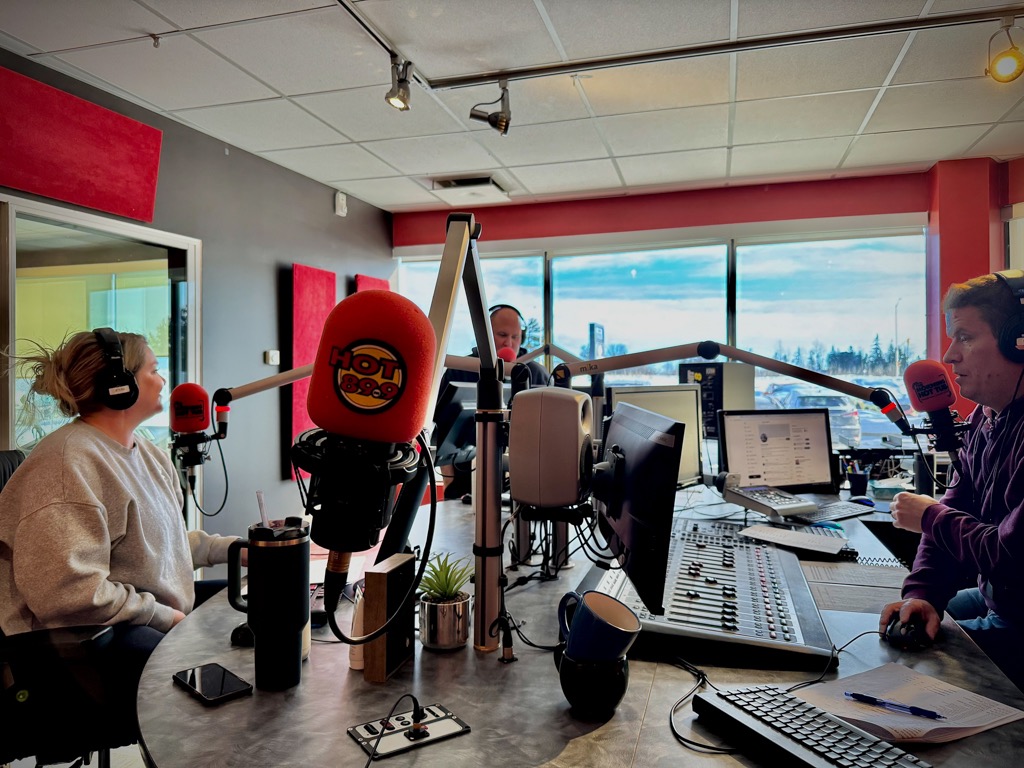
Algonquin College journalism graduate Jenni Condon (left) hosts The Morning Hot Tub live on Feb. 19 with Mauler (middle) and Rush (right). [Photo by Josefine Lukaszek]
As Algonquin College seeks to potentially cut their Broadcasting - Radio and Podcasting program, there are rising concerns about the future of radio among professionals in the industry.
A total of 37 programs are expected to be cut. The college will announce official program cuts during its board of governors meeting on Feb. 24.
The college has been “in the red” for a few years now, Jessica Brando, a full-time professor for the radio broadcasting and podcasting program, said.
When Ontario Premier Doug Ford froze and cut tuition by 10 per cent for Canadian students in 2019, the college could not compensate for its lack of income, Brando said. Therefore, the college welcomed more international students because they pay a higher rate for tuition than domestic students, Brando said.
Five years later when the federal government announced its 10 per cent decrease in international student permits for 2025 and 2026, the college prepared to incur a financial deficit, Brando said.
Brando said that domestic students fill the majority of the seats in the radio broadcasting and podcasting program.
“I think it’s wild that we have Canadian students who want to study in this field but because they pay a domestic rate it’s not enough to keep our program going,” Brando added.
Brando said that she feels that the college does not appreciate the work of its teaching staff, even though they continually place graduates at radio stations and podcasting production studios across Canada.
Noah Wachter, a producer for The Vassy Kapelos Show and 2021 graduate from the radio broadcasting and podcasting program, said that the program is necessary for those who wish to work in the radio industry in Ontario.
The program is a “pipeline” that prepares students for the radio industry unlike any other university or college program in the region, Wachter said.
Wachter said that the majority of his colleagues at CTV News graduated from the program. “A lot of us felt that it was a big loss, not just to the local media community but also to the national radio community as a whole.”
With the potential cut of the program, Wachter said he thinks there will be a shortage of professionals entering the radio industry in Ottawa.
“The loss of creative- and media-focused training programs will have long-term effects on cultural, professional, and the media landscape as a whole,” Wachter added.
The potential cut of the program is signalling a future that is “definitely” moving away from radio, Wachter said.
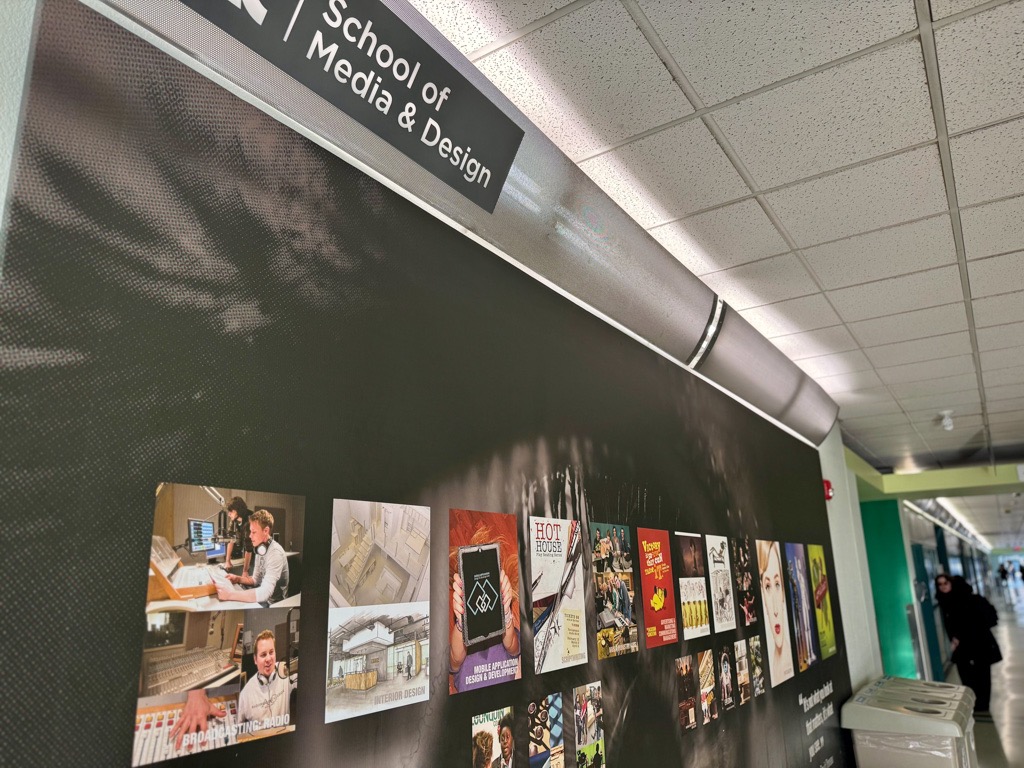
Algonquin College’s School of Media and Design hallway on Feb. 18. [Photo by Josefine Lukaszek]
“It’s hard when you see the programs being cut. How do we keep radio alive? How do we keep people interested?” Jenni Condon, co-host of The Morning Hot Tub on Hot 89.9 radio, said.
Condon graduated from Algonquin College’s journalism program and learned how to be a radio broadcaster through her experience in the field. She said that she thinks that this will be the reality for people who want to work in the radio industry.
Condon said that if the college decides to cut the program, she hopes that it will incorporate more education on radio broadcasting into the journalism curriculum. Therefore, students who want to work in the radio industry will have “something more tangible to walk away with when they’re done with the program,” she added.
As cuts happen within all major broadcasting companies in Canada, it is hard to keep radio broadcasters in the industry, Condon said.
Condon added, “If you stand out, you can survive [in the industry].”
Post a comment