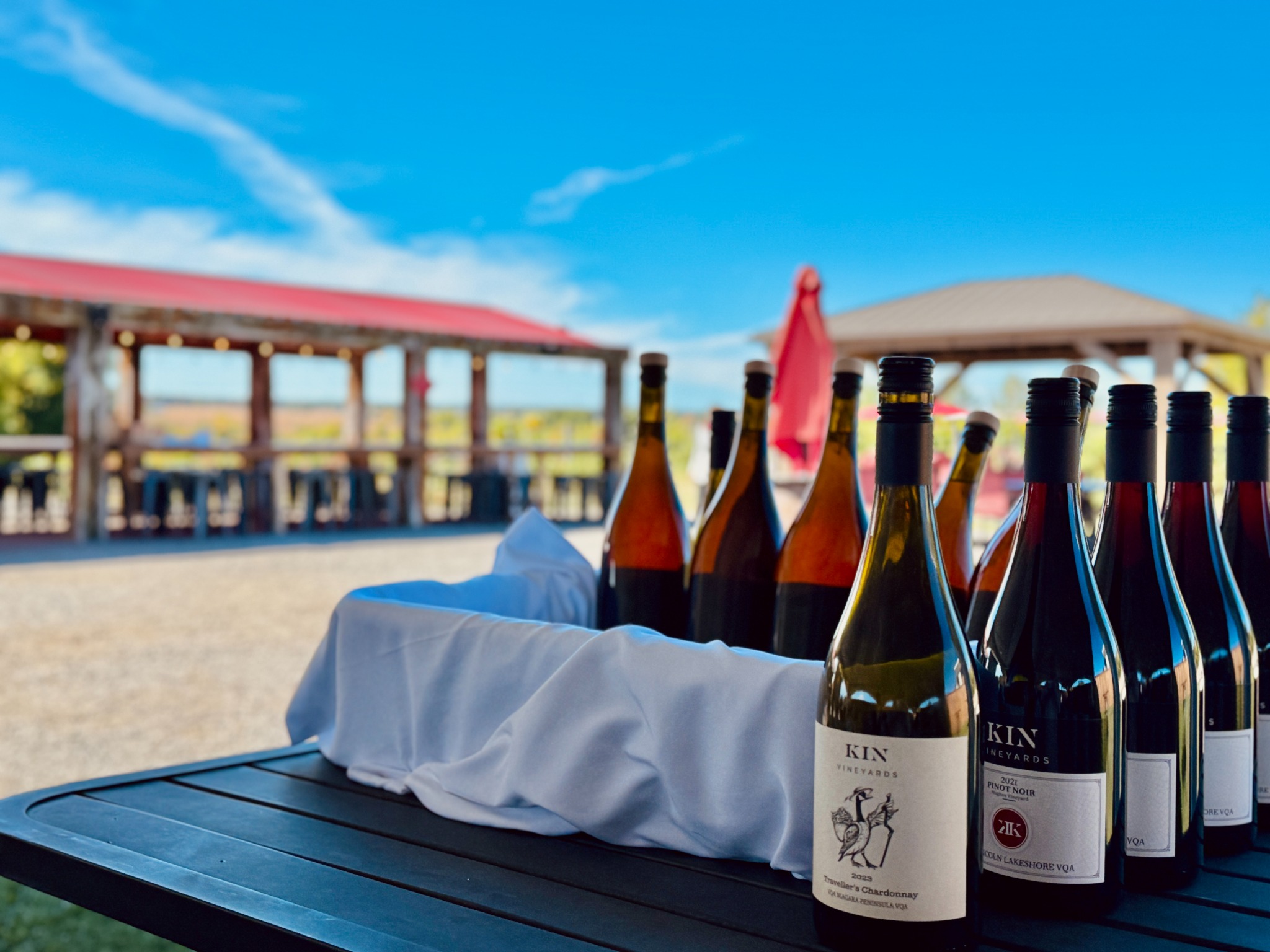
Ontario wine at crossroads: Economic growth signals promise but long-term stability remains in question
Wine glasses are raised in toast for different occasions, but what seems to remain the same are the reactions after that first sip: surprise, curiosity, and almost always pleasure.
American corporate staff and tourists join Laura Batten for private wine tastings and wine club events every day. Some of them do not even know Canadian wine exists.
“The common sentiment is that they did not realize that Canadian wine is as delicious as it is,” Laura Batten said, owner of Crushable Wine Club.
Batten critiques the lack of Ontario wine in local stores, until the trade war. “I think that kind of tethers into the whole brainwashing and conditioning of the monopoly. They are not doing local wineries any favours whatsoever so it's not really the consumer’s fault.”
“People don’t know what they don't know,” and are surprised when they experience delicious local options, Laura Batten said.
Over the course of Batten’s business, what she finds most rewarding is helping locals and U.S. tourists discover their favorite wines from Ontario.
Ontario wines are rising in popularity as a result of Canada’s trade war with the U.S. With a 56 per cent influx of growth of local wines being sold in the LCBO and other convenience stores, Ontario wine is enjoying its status in the wine industry.
However, many consumers still prefer U.S. wine over local wine, which would put the industry at stake when U.S. wines make their way back to Canadian shelves in the future.
So the question is will this momentum last?
The popularity in Ontario wine is a “circumstance of good timing,” Batten added. She said she believes that this is the time when local curiosity should “wear off the novelty” of U.S. wine.
There is an oversaturation of vineyards in Ontario, Batten said. Although she thinks the momentum of Ontario wine will continue, she believes wine culture needs to change in the province because right now it is a “rich person’s game.”
“It needs to be more of an old world kind of European approach where it’s more about creating the experience in the environment as opposed to this notion of social capital.”
Batten describes a European approach as making illegal and illicit wine in plastic bins with one’s neighbours. This approach allows for a free spirit approach to wine.
The Ontario wine industry is a driver in Canada’s overall GDP, contributing $5.49 billion in 2019 and 2024. The Ontario wine industry also brings 2.6 million visitors into the region, and offers over 22,000 jobs.
The Ontario wine industry awaits positive change with the addition of 24 new grapes to its Vintners Quality Alliance (VQA) wine list, allowing for a broader variety in local wine. These grapes mostly originate from European woodstock and are bred in the U.S. to withstand colder climates, like that in Ontario.
Other initiatives to support the industry include a one-year extension of the $10-million Winery Agri-Tourism Economic Relief Grant, the elimination of the 6.1 per cent basic tax at on-site winery retail stores, and the three-year extension of the federal Wine Sector Support Program- valued at $177 million.
This trade war has changed the industry in a way he never expected, Robbie Raskin said, owner of Archives Wine and Spirit Merchants.
The popularity of Ontario wine is a good thing for the wine industry, Raskin said. As consumers found themselves in the habit of buying U.S. wine, especially California reds, this shift has allowed them to broaden their horizons by trying local wine.
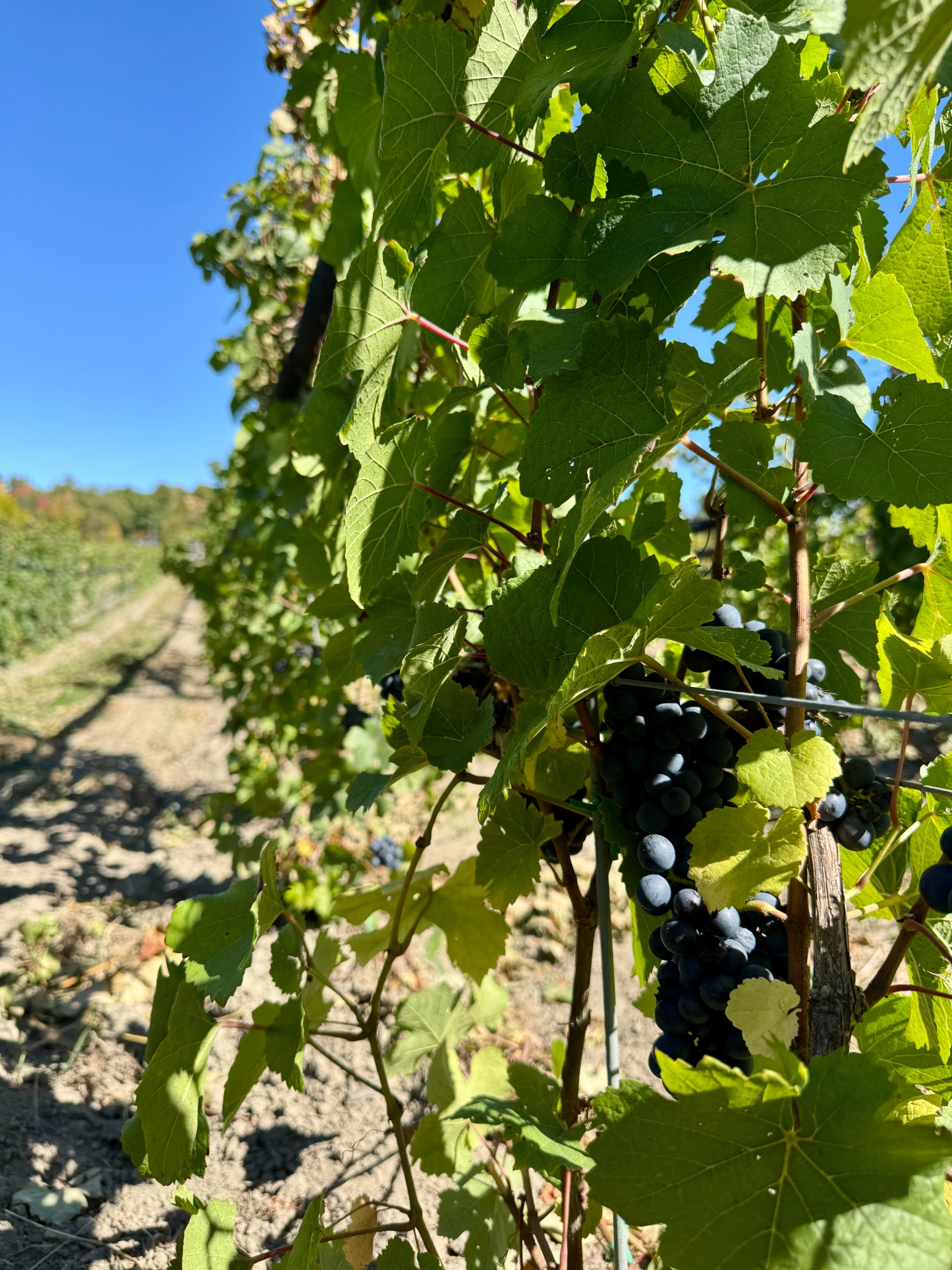
Ontario wine has a Burgundian style closely compared to an Oregon wine, Raskin said. Ontario reds are earthy and forest-floor, whereas whites taste more mineral and citrusy. These characteristics present themselves because Ontario experiences cooler climates than the U.S. which makes the grapes taste more acidic. Ontario specializes in rieslings, unoaked chardonnays, pinot, gamay, cabernet franc and sparkling wine.
Prior to this shift, his business contained 95 per cent Ontario wine, which set it apart from other merchants like the LCBO. However, with the emergence of more local wine in the LCBO, grocery stores and gas stations, his products are not unique from those sellers. Now he finds himself purchasing higher-end wines to continue selling unique wines to his clients.
“I am personally very pleased that the LCBO is finally featuring more and better Ontario wine. . . professionally it’s really, pretty devastating to the business model,” Raskin said.
This year, the LCBO is offering a 15 per cent licensee discount off the retail price of beverage alcohol for eligible licensed businesses for purchases made through LCBO retail stores. However, Raskin then needs to pay the 13 per cent sales tax on the bottles he sells, resulting in a small profit for his business. It is impossible to compete with the LCBO’s prices while still making a profit, Raskin said.
“I don’t think this is going to be a transformative change long-term,” Raskin stated. From his experience, the LCBO prefers to work with bigger producers because they gain maximum profit that meet their quantity demands. As a result, Raskin thinks smaller, Ontario wine businesses will be bumped if U.S. wines make their way back to the shelves.
The only way that Ontario wine will continue its momentum after this trade war is if the LCBO works with other national producers to sell Canadian wines in every province, especially British Columbia (BC), Raskin said.
There are currently only a few BC wines being sold in Ontario, which is frustrating for Raskin because they produce wines that Ontario is not able to make because of its chilly climate. What we are seeing is an increased number of Ontario wineries selling to a limited market within the province. If national wine could be shared, then there would be a significant change in all wine markets in Canada, Raskin said.
Raskin tried a vermouth wine from a local company in Vancouver Island and wanted to bring it to Ontario to sell at his restaurant but, due to limitations with the LCBO, he could not bring the vermouth to Ontario.
Determined to bring the vermouth home, he shipped the bottle to his friend in Australia and picked it up a few months later while on a trip in the area.
“Something is broken in our country if this is what it takes to try and get a bottle of vermouth from BC into Ontario,” Raskin stated.
Roderick Phillips, a wine historian and professor at Carleton University, compares wine pride in BC to Ontario, stating that people in BC think highly of their products, but Ontarians compare wine quality from decades ago to current bottles. It has gotten better over the years and people would be surprised if they tried it again, Phillips added.
Although Ontario wineries are experiencing a newfound momentum, this is not an opportunity for them to ease off of their marketing just because sales are heightened, Phillips said.
Ontario wine must stay in the forefront of consumers’ minds, Phillips stated. A way that the industry can continue this newfound momentum is to talk about their products, explain the wine during tastings and emphasize the importance of purchasing local.
However, there are still consumers who are not convinced that they will support local wine when U.S. wine finds its way back to the shelves.
The perfect wine: a full-bodied, smooth, cabernet sauvignon that is not too dry and not too sweet, but a perfect medium.
This is how Kelly Ingrey describes her favorite wine. However, since her favorite U.S. wines have been pulled off the shelves due to the Canada-U.S. trade war, she finds herself purchasing "temporary alternatives,” she said.
These temporary alternatives are Italian and Australian wines because Ingrey does not like Ontario wine.
“The problem isn’t Canadian [wine], it's Ontario [wine],” Ingrey said. All of the Ontario wines she has tried have been too tangy and acidic.
Ingrey has tried to like Ontario wine, purchasing recommendations from her friends and experiencing wine country in Ontario during a trip to Sandbanks, but nothing compares to her pre-trade war glass of red.
Her friends had a wine tasting night where each person brought bottles of Ontario wine. One of her friends tricked the group and brought a Tom Gore red, which Ingrey identified immediately as a U.S. bottle.
Ingrey wants to “stop playing games” with her wine and looks forward to U.S. bottles making their way back to Ontario.
On the other hand, Madeleine Gordon prefers a dry Sandbanks white wine with fruity notes. Coming from a family of wine drinkers, she said she views this shift in the local wine industry as a positive opportunity for consumers to support local businesses.
“It is nice seeing local businesses prosper,” Gordon said.
Before the trade war, Madeleine would buy bottles that appealed to her on the shelves, but now she deliberately finds herself purchasing local.
Debbie Inglis is a scientist and director of Brock University’s Cool Climate Oenology and Viticulture Institute. Her research focuses on assessing new varieties of wines by isolating yeast responses in ice wine fermentation.
“We do have world class wine in Ontario,” Inglis said.
Inglis said that she believes that new varieties of wine, like those that will be produced from the new VQA list, will maintain Ontario’s newfound momentum within the wine industry.
There is the reality that consumers may resume purchasing wines from California that contain a preferred profile to Ontario wine, Inglis said. Although, “hopefully there’s an opportunity to keep Ontario wine in the forefront, you know, when you walk into a liquor store.”
Post a comment